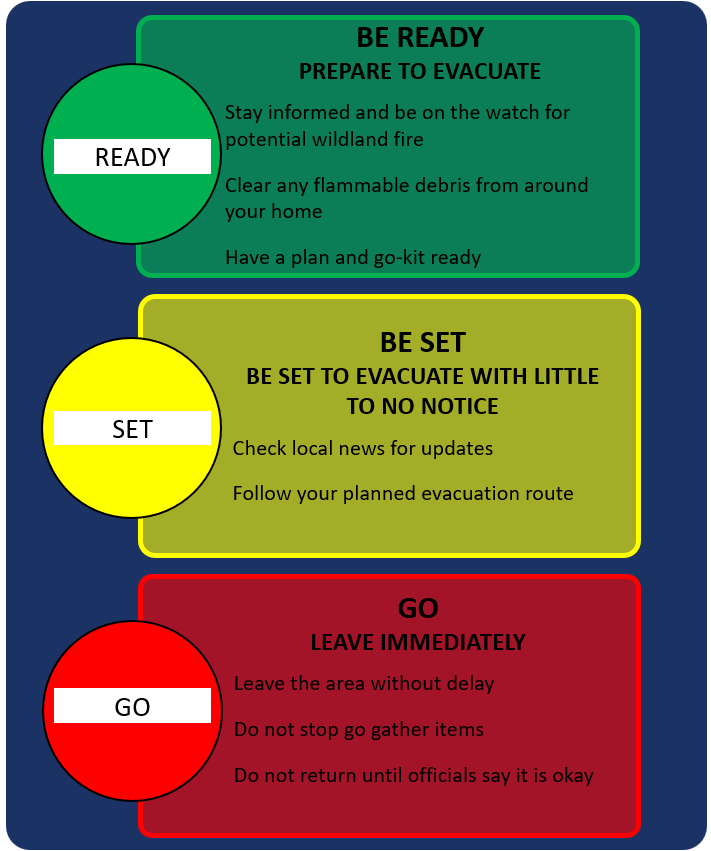
Ready, Set, Go! is a national wildfire preparedness program that guides residents in high fire risk areas with the three (3) important phases of preparing for wildfire season.
READY – Be prepared for fire season by clearing any flammable debris from around your home (e.g., leaves, sticks), having an evacuation plan, and staying informed.
SET – Be ready to evacuate the area with little or no notice.
GO – Evacuate the area without delay, do not stop to collect anything you don’t have in your go kit, and do not return to the area until officials say it is safe.
Wildfires can start from any number of causes such as lightning strikes or downed power lines. Most wildfires are human-caused due to carelessness with campfires or discarded lit cigarettes.
South Carolina’s wild fire season generally occurs in late winter through early spring.
What To Do In the Event Of A Wildfire
Before a fire approaches your home
If you see a fire call 9-1-1 immediately. Do not assume someone else made the call.
Clear any combustible materials from around your home or business including sticks, leaves, flammable chemicals.
Prepare to leave the area
Turn all lights on inside and outside of your home. This makes your home easier to see in smoky conditions.
Keep all doors and windows unlocked so firefighters can access the home quickly if they need to.
After the Fire
Check your roof immediately. Put out any small fires, sparks, or embers. If the fire is too big call 9-1-1 right away.
Maintain a “fire watch” for several hours or days after the fire.
Think Before You Burn
Be Prepared.
Understand the laws about burning.
Respect the weather.
Never leave your fire.
Are you preparing to burn?
South Carolina law requires you to notify the Forestry Commission before burning outdoors.
How to make notification?
Online –The quickest way to notify the Forestry Commission you will be burning. Make your notification at scfc.gov/notify
By Phone –You can also call notify Forestry you will be burning. For Greenville County, you can call 800-986-5299. For other counties in South Carolina please click here.